6/14/11

MuseScore: free music notation software

 I haven't tried this yet, but at the cost of zero dollars it's worth looking into. I have a difficult enough time trying to learn Finale, so let me know what you think if you do get this program going.
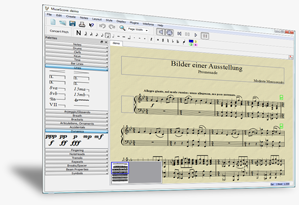
Screenshot


MuseScore is a free cross-platform WYSIWYG music notation program, that offers a cost-effective alternative to professional programs such as Sibelius and Finale.
You can print beautifully engraved sheet music or save it as PDF or MIDI file.


Some highlights:
  • WYSIWYG, notes are entered on a "virtual note sheet"
  • Unlimited number of staves
  • Up to four voices per staff
  • Easy and fast note entry with your keyboard, mouse, or MIDI keyboard
  • Integrated sequencer and FluidSynth software synthesizer
  • Import and export of MusicXML and Standard MIDI Files
  • Available for Windows, Mac and Linux
  • Translated in 35 languages
  • GNU GPL licensed

6/8/11

Symmetrical Diminished & Pentatonic Scale over Giant Steps- Ed Saindon

Regular contributor Ed Saindon wrote this solo chorus of Giant Steps using only Pentatonic scales over the Major chords and Symmetrical Diminished scales on the Dominant chords.

Giant Steps Solo

Ed Saindon's web site

5/19/11

Dred Scott- Dredsan

dredsan and brianji were meditating on a large rock overlooking a gentle stream.  brianji turned to dredsan and said,
'those who speak against killing and who desire to spare the lives of all conscious beings are right.'
dredsan replied, 'yes, my friend, it is good to protect even animals and insects.'
'but dredsan, i am troubled.'
'speak your mind, enlightened one.'
'what about those persons who kill time - those who destroy individual wealth or destroy the economy or the environment?'
'we should not overlook them.'
'and what of those who play killing jazz solos?'
'that is a different matter altogether, brianji.  one who plays a killing jazz solo is only guilty of self-indulgence.'
'not an admirable quality.'
'true.  but necessary in order to persevere in the pursuit of something that few can understand or appreciate.'
'so the killing jazz solo is actually an honorable style to be respected?'
'yes, brianji.  much respected.'

From Dred Scott's dispatches

Dred Scott's web page

The Joseph Viola Project

 I was thinking the other day about Joe Viola and how it would be valuable to try to assemble some of his teaching methods and create a website similar to the Joe Allard Project website. Joe V and Joe A were there two greatest saxophone teachers of the 20th century, imho, and they both deserve to have their knowledge recorded for the sake of posterity. Of course Joe Viola has left us several great saxophone technique books, but his unique methods of teaching sound production haven't been recorded anywhere (as far as I know).

 Joe V knew the saxophone like no one alive today. He knew exactly what was going on inside your mouth just by hearing you play and knew how to correct the problems, sometimes that even involved putting a latex dental finger glove on and poking around in your mouth to show you what you were doing wrong with your tongue. Joe knew how to work magic, that is the only way to describe what he did because his knowledge was so esoteric that it entered the realm of mysticism. This sounds far fetched, but I don't think that any student of Viola would disagree with me.

 If you can remember any of Joe Viola's methods or concepts and don't mind taking some time to write whatever you remember I think it would be a highly worthwhile endeavor. Then I'll compile everything and put a web page together. Each year that passes means fades our memories of what we learned from this true master of the saxophone.

You can email me directly at: casavaldez@comcast.net


Joe Viloa Era- Berklee tribute article

5/18/11

PageFlip Cicada- Bluetooth pedals

A while ago I reviewed the Airturn Bluetooth pedals. I've been using my iPad as a PDF sheet music reader for months now and the Airturn pedals solved the page turning problem, which allowed me to start playing tunes that were more than one page long. A few weeks after I got the Airturn pedals the company discovered a problem with the mono jacks and had to recall most of the units they had shipped out. I sent my pedals back and waited for the replacements to arrive. The post office lost my package for several weeks and I was getting quite impatient because I was back to only playing one pagers on gigs, which was a big drag. My buddy Joe had picked up a new foot pedal called the PageFlip Cicada that looked pretty cool. I went ahead and ordered one while I waited for the post office to materialize my Airturn pedals.

 There were a few things that initially interested me in the PageFlip. The first is the fact that the PageFlip is a single compact unit, unlike the Airturn, which consists of two separate foot pedals connected by cords to a Bluetooth transmitter box. One of the big issues I had been having with the Airturn was that the pedals would constantly move around as I used them. They had to be constantly repositioned by hand. It was a real drag to have to keep bending down to fiddle with the Airturn pedals on the floor between tunes. The PageFlip Cicada never needed to be repositioned because the pedals were connected.

 The Page Flip has a few features that the Airturn lacks. The PageFlip Cicada can be configured to transmit page turns in several different ways, depending on which application you are using to read music. It can be set to send signals as page up/page down, right arrow/left arrow, right mouse button/left mouse button, or underscore/delete. The Cicada also has a repeat switch in case you want the ability to turn multiple pages quickly.

 The Cicada takes up a lot less floor space than the Airturn units, which unfortunately also makes for a greater likelihood of stepping on the wrong pedal in the heat of battle. This brings me to the biggest problem that arose while using the PageFlip Cicada......accidental page flips. The pedals of the Cicada are fairly high off the floor compared to the Airturn and they don't have much resistance. This makes it quite difficult to tell when my foot was actually touching the pedal. Because of this I felt like I had to keep my foot raised up above the pedals, so as not to trigger them accidentally. If you're wearing hard soled dress shoes there just isn't enough tactile feedback to know when you are actually hitting the pedal. As I was soloing my foot would slowly drift down and trigger the pedals if I didn't pay attention to what I was doing, then....BAM...suddenly the guitarist I was playing with was reading the wrong changes. I eventually got the hang of it and learned to keep my toes higher in the air and just made more of an exaggerated stomping motion when I wanted to change pages. Annoying, but not a huge deal really.

 I figured out an easy mod to make the Cicada pedals more responsive. I just slipped folded pieces of paper into the top part of the pedal hinges, which lowered the pedals down to the point right above where they trigger. This eliminates the mushy first part of the pedals' motion, where I can't even tell if my foot is on the pedal or not. This also allows me to keep my toes lower, where before I felt like I had to fight to keep my toes elevated so that I didn't accidentally trigger the pedals. There is much more resistance with the pedals lowered and now I feel like I can actually tell when my foot is touching the pedals.

I think that probably the most compelling reason to go with the PageFlip Cicada over the Airturn in the end is the price. The three-piece Airturn (two pedals + transmitter) sells for $124.95, and more if you want to buy the board that holds everything place. The PageFlip Cicada sells for $79.95. I think the Cicada is the pedal that I'll be taking to my gigs.

PageFlip Cicada website


5/8/11

The Musical Octave- Thomas Váczy Hightower's writings

Thomas Váczy Hightower
I ran across an interesting web page written by a Dane named Thomas Váczy Hightower. This stuff is right up my alley. Hightower writes about Music & Society, Creation of Musical Scales, Effects of Harmonics on consciousness and health, Music of the Spheres, and other esoteric acoustical ideas.

Thomas Váczy Hightower's 'The Musical Octave' page

5/1/11

The saxophone actually has a parabolic conical shaped bore

(click above graphic for a large version)
My student Randy, who is an engineer for a pipe organ company, put this drawing together after reading a great book about the history of the saxophone called The Devil's Horn. The book explains how the side of the saxophone that has the tone holes is actually has a parabolic conical shape, rather than just being a conical shape. Adolphe was a true genius.

4/12/11

Ed Saindon's article on Harmonic Practices


Berklee professor Ed Saindon sent me his article on Harmonic Practices. In this two page article Ed covers many different types of harmonic slight of hand. This is a very good overview of many of the different harmonic concepts that I'm written about in this blog, definitely something that I'm going to start giving to all of my students.

Harmonic Practices- Ed Saindon's
Ed Saindon's web site

3/25/11

Over 1,000,000 page views at Casa Valdez Studios!

Yes, over the last six years this blog has gotten 1,025,238 page views to date. Thanks to all of you.

3/20/11

The Meist: Clarinetist Perry Robinson- by Mark Sowlakis

This piece was written by Mark Sowlakis, who is a regular guest blogger here at Casa Valdez Studios.
  Throughout the history of the jazz clarinet, there exists no such figure as the mercurial clarinetist Perry Robinson. The man is a living legend, having recorded on such famous albums as the first Charlie Haden Liberation Music Orchestra recording, Carla Bley’s epic Escalator Over The Hill and The Call, Heny Grimes legendary free jazz disc on ESP records. His debut as a leader, Funk Dumpling on Savoy Jazz (1961), features a band of legendary proportions: drummer Paul Motian, pianist Kenny Barron and Henry Grimes on bass .  Recorded when Perry was 19 years of age, it has withstood the test of time, still sounding fresh and interesting to this day. This recording was my introduction to Perry’s work. I remember bringing it home and listening to it the first time, and being stuck by his highly original tone and conception. Little did I know how much influence he would have on me over the course of the next 15 years……..Initially, merely through his recordings.

  My friendship with Perry, often referred to by his friends as Meist, short for Maestro, began after reading his hilarious biography The Traveler (Writers Club Press), co written with Florence Witzel.     The details of his life are incredible and too much to go into here, but the accounts of his days gigging with Dave Brubeck (while Jerry Bergonzi was in the band, I might add…) and other jazz legends is truly fascinating. At the end of the book it states that Perry was alive and well and living in Jersey City, NJ. I called him up and literally told him he was my spiritual clarinet grandfather and that we should be friends. We had several conversations over a few years and traded CD’s. Over time a plan was hatched and the result was my recording Sinfonetta, made in 2004 in New York City with Perry, George and Ed Schuller, and Frank Kimbrough. During the recording process, although I was familiar with Perry’s playing, I was struck by the lightness of his tone and attack, and the strength of his solos and the presence of his personality in the music. I must defer to some written words that I believe describe the personality, style and imagination that came across to me in the Meist’s  playing: Critic Rich Scheinin described Perry to me in an email recently….”It’s almost like folk music, and with such a free and impish kind of spirit, and very melodic.” Perry’s friend from New York, Matthew Snyder, said this to me in an email recently, “Nice transcription, it shows what great, understated and beautifully constructed solos Perry was capable of playing even in 1962.” In short, I couldn’t have said it any better myself.


  Recently I set out to transcribe a couple of Perry’s solos, in order to get a better sense of what he’s made of musically, and to try to deconstruct and demystify some of his work. The logical starting point seems to be Funk Dumpling, a Henry Grimes tune that becomes a blues in D flat concert after the melody statement.  Take a look at the transcription and have a listen to the edited recording, you’ll hear unique tone and notice the individual melodic sense that he creates, while staying pretty much diatonically rooted to the changes. If you delve fully into Perry’s music you will see what an incredible contrast this solo makes to some of the “free” and “out” things that he’s recorded over the years. I like to say that The Meist has a foot in both jazz camps, the traditional jazz improviser using conventional harmony, and the free jazz vocabulary that incorporates microtones, growls, and multiphonics. And that duality, to me, is the main thing makes him truly original and great.

  My tune Seaside Sanctuary really shows Perry at his best from the melodic side.  In the studio Perry forgot that he was supposed to take two choruses on this tune, as Frank does on his solo.  I sure do miss that second chorus, as he was developing some nice shapes here.  But instead he managed to create a very clever short solo that hangs together brilliantly; you’ll see again how he stays well within the traditional harmony.  Meist plays such cohesive phrases, he truly has a gift for melody.  I love what he did with this here, it is a Meist Classic!

   My tune Simple Beauty gave Perry a chance to show off his gifts in a minor tonality.  I wanted to give him a platform to make that kind of introspective statement that only he can make, and something minor and moody seemed the route I wanted to take to get that to happen. Again, a Meist Classic, great phrases, great mood and vibe, so very relaxed.  The breathiness of his tone, reminiscent of his mentor Tony Scott, really colors his sound here. This is a study in how to communicate a thought or feeling in the music, his note choices and phrasing truly sublime in this key. He did it again, a simple, beautiful and elegant solo…

Mark Sowlakis
   The clarinet has been forgotten for a long time in jazz. There are only a few great ones left to admire and study; Perry certainly has blazed a path for us. His recorded legacy is amazing, and I hope you will take the time to find some of his music and go on a musical journey with him. He’s opened my eyes to some things on the clarinet and in music that I might have missed  out on had I not followed his path.  Perry Robinson, what a character and what an original.  Thanks Meist……Markos

Funk Dumpling MP3/transcription
Simple Beauty MP3/transcription
Seaside Sanctuary MP3/transcription

Perry Robinson's MySpace page
Perry Robinson on Wikipedia
A Fireside Chat with Perry Robinson @ All About Jazz

Mark Sowlakis' website  


3/19/11

Transcription- James Moody's flute on Cherokee


Anders Bostrom transcribed Moody's smoking flute solo over Cherokee from a 1968 live performance in  Copenhagen with Dizzy's big band. Killing, so killing.

Transcription of James Moody's Cherokee solo

3/17/11

The art of the added subV7

One of the most useful post-Bop harmonic devices is the added subV7s. This all purpose device can be used to add more harmonic motion over static or modal harmony, create delayed resolutions, to create smoother transitions into new keys, and to get a little more juice out of boring progressions. It's simple and it sounds quite modern when used correctly.

One of the first guidelines of chord substitution is that you can add a related V7 after any ii-7 and you can add a related ii-7 before before any V7 chord. So if you have one bar of D-7 you can add a G7 after it or vice versa.

For example:
/D-7    /        becomes      /D-7  G7/
                          or        
/G7     /      becomes       /D-7  G7/

  Now we can take this to the next step, which is that you can add a related V7 before ANY CHORD!
You say, "Whaaa?", but yes, it's true. This creates a strong dominant resolution and is a good way to step outside the changes for a second before resolving strongly into the next chord. It should sound very outside while you're playing the added dominant, but as soon as it resolves your ears hears it retroactively as a logical resolution. Once you get the hang of this device you'll soon realize just how often it can come in handy.

 In general, when you use added V7s it's a better idea to alter a them a bit rather than to just use a straight dominant chord/scale. This is because the more alterations you add the more momentary dissonance and resolution there will be, also there will be more voice leading into the resolution and the dissonance will sound more reasonable once it resolves.

So if we start with this:
original        
          /D-7           /D-7                  /G7                 /G7                /C      /

We can do this:
example #1   
         /A7alt        /D-7     D7alt   /G7   D7alt    /G7    G7alt  /C      /   
scales:        (Bb mel-)                  (Eb mel-)           (Eb mel-)                (Abmel-)

   We can also think of these added dominants as subV7s (Tri-tone subs), which would give us the these changes:      

 example #2   
           /Eb7(#11)   /D-7   Ab7(#11)/G7  Ab7(#11)/G7  C#7(#11)/C     /
scales:          (Bb mel-)                   (Eb mel-)             (Eb mel-)               (Abmel-)

Now of course these subV7s are going to take exactly the same scales and will be functioning the same as the V7alt chords we added in the previous example, but it may help you create smoother chromatic sounding lines if you think of it this way. I know it does for me.

Now I realize that it may be a lot to calculate at first because you've got to consider the chord you want to resolve to and add a dominant chord a fifth above it before it. Then if you want that added dominant to be altered you have to play the melodic minor scale a half-step above that.......OR if you're adding subV7s you first need to add a dominant chord (with an added #11) and then play the melodic minor a fifth above that to get a Lydian Dominant scale.

Both of these are the same difference in the end:

a fifth + a half-step= minor 6th

or a half-step + a fifth=minor 6th

There's a quicker way to figure out how to find the scale that creates this subV7 sound. Just look at the target chord that you want to resolve to and then before it play a melodic minor scale a Major 3rd below it.

You can also imply a Dominant 7(b9) chord rather than a subV7 by just going down a half-step from the chord you want to resolve to and playing a diminished scale.

Here is what I mean. If you have these changes:  

/D-7              /G7     /C      /

and you want to do this:                                     

  /D-7  D7(b9)/G7      /C      /
                                                                      
You can think about it this way, the target chord that we want to add the secondary dominant before is G7, so a half-step down from there is F# diminished. This is really just a way to cut down on the time it takes to calculate the correct chord-scales.

I can't tell you how often I use these devices. They sound very modern and hip, and they create a dramatic dissonance that immediately and neatly resolves.

Below is a clearer version of example #2. Click on it to see a large version.

Michael Brecker's scrolling Confirmation solo transcription

3/1/11

Scofield clinic- Stella exercise #2 (arpeggios)

Guy Vaerendonk, a regular reader from Belgium, sent me his transcription of the arpeggio exercise that Sco played over Stella. This is from a clinic that I posted recently. Guy says that Sco's arpeggios got a little off near the end, so he opted to notate the strange bars as 5/4  and 9/8 to keep it accurate.

Thanks Guy!
(click above for larger version)

Link to exercises