7/14/05

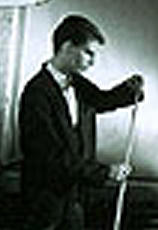
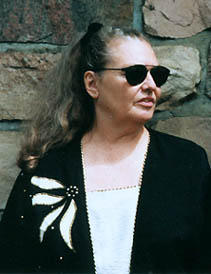
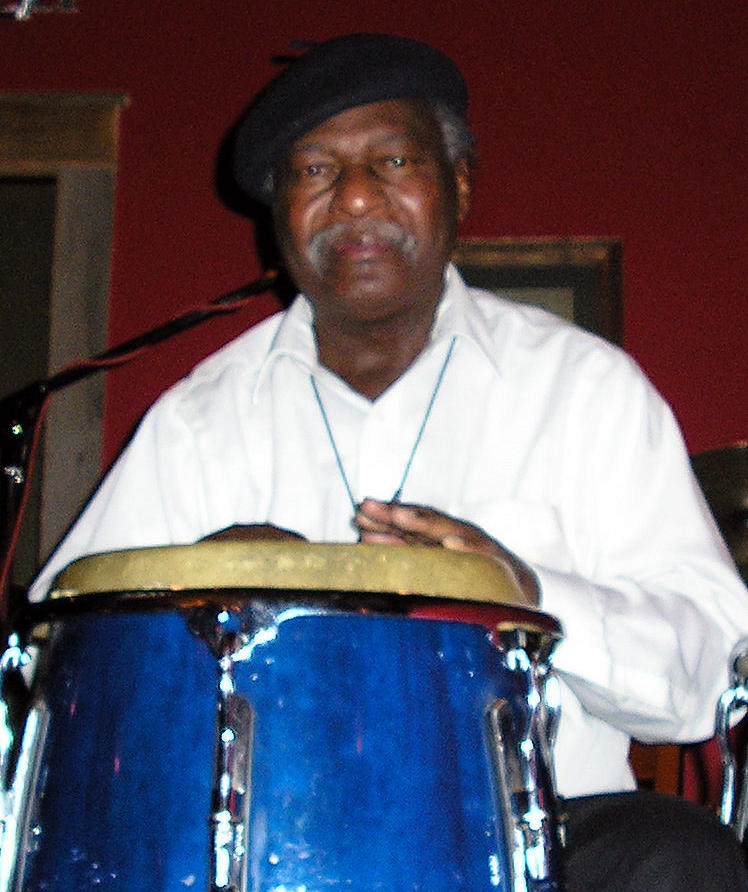
Lawrence Williams and Nancy King


After leaving New York City (ok,ok, Jersey City) in 2000 my wife and I decided to move back to Santa Cruz, California where I grew up. It really seemed like the Garden of Eden after living in the big city but it was not the town that I had grown up in anymore. Santa Cruz had the cost of living and traffic of New York and all the great players that were once there had either moved to NYC or the Bay Area. We were paying New York prices for a beach?! After about four months I arranged some gigs in Portland, Oregon with monster tenor saxophonist Rob Scheps. As soon as drove into town I fell in love with the place. It had beautiful rivers, trees and mountains and a thriving Jazz scene, and it was CHEAP!!!.

One of the first gigs we played was on the coast with vocalist Nancy King, pianist Steve Christopherson, Oregon (the band, not the state) bassist Glen Moore, and drummer Alan Jones. Every one of these players was not just smoking, but truly world class. Nancy King was by far the greatest Jazz singer I had ever heard live, and I had played with and heard many of the top singers in the world. Her instrument is incredible, hear ear flawless, she swings her ass off, she can do any tune in any key, and she is one of the greatest scat singer who has ever walked the face of the earth. I am not alone in this assessment of Miss King, her fans include Mark Murphy, Diana Krall, Sheila Jordan, John Hendricks, Kurt Elling, Karin Alyson and Luciana Souza (among many others). She was mainly responsible for talking me into moving up (although it didn't take much convincing) to Portland. Scheps made me promise that if I moved to PDX I wouldn't tell anyone back in NYC how good it really was here,"Just tell them that it rains a lot".Unfortunately Alan Jones has found greener pastures in Bavaria and Scheps is moving back to NYC to seek his fortune.

Nancy has become like a hip grandma to me. We play gigs, go to breakfast and movies and hang quite often. She introduced me to Lawrence Williams who became a very influential mentor to me. Lawrence came up in Detroit where he was trumpet master Marcus Belgrave's drummer and composer for decades. There he became a mentor for players like Kenny Garrett, Regina Carter, and Geri Allen at the acclaimed Detroit Jazz Workshop. Lawrence has a heart of pure gold and a highly developed spiritual philosophy of music. He spent years as a young man living in an ashram in Arizona. Nancy swears up and down that she once walked in on him one day when he was meditating and saw him floating a foot above the floor!

Lawrence reminds everyone around him about the true spiritual nature of music. He lived to play and write music and he played and wrote music to express his love of life and for other people. It was never just about him. He was always grateful for each and every note. Lawrence is one of the baddest drummers AND composers that ever lived in my book. Once in an interview 'Smitty' Smith once said that Lawrence was one his biggest influences. His tunes are even analyzed at Oberlin Conservatory in composition classes. Geri Allen has recorded several LW tunes for the Blue Note label, check out the tune '#3' on her CD 'The Nurturer'. Before moving back to Detroit last year LW let me copy all of his compositions, which ended up equaling about five Real Books! LW lost one of his legs last year due to kidney complications so he hasn't played for a while, but he hasn't lost one bit of his love of music or of life.

So far I have put together two concerts of LW's music. We are planning another one in November. This time we are going to bring out Marcus Belgravefrom Detriot. This show will be at The Blue Note Jazz club here in Portland.

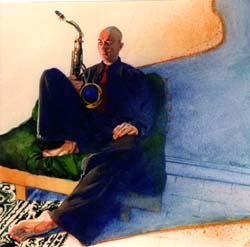
Lawrence picked up drawing when his health problems stopped him from playing and he immediately became a prolific artist. I shot several hours of interviews with him talking about his philosophy of music that I have yet to edit (sooo far behind). He is another true living Jazz master.

  • "In the days before Motown, Detroit produced two great things: flathead V8 engines and a vibrant, revved-up jazz scene that included such giants as Elvin, Thad, and Hank Jones, Kenn Cox, Pepper Adams, Kenny Burrell, Marcus Belgrave, Harold McKinney, and Sheila Jordan to name but a few. Composer-drummer Lawrence Williams is one of the torchbearers of this classic era-as evidenced by his elegant bop-tinged compositions with their shades of blue, and propulsive (yet caressing) Motor City swing." Tim DuRoche


7/13/05

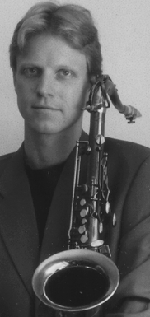
John Gunther- Multiple Personalities


Two years ago I brought John Gunther out to Portland from NYC. We played a few nights at the Brasserie, he did a clinic at PSU and I took him into the TV studio for a shoot. John is at NYU teaching and working on a doctorate. He got his undergrad degree from Berklee where he studied with Garzone and Joe Viola. After that he went down to Miami and got a masters degree while commuting to NYC to study with Lovano, courtesy of the National Endowment for the Arts. He played in my Latin-jazz Quintet while I was living in New York. John is about the just about the most well rounded and professional saxophonists I've ever met. He plays tenor, alto, soprano, flute and clarinet, each one like it was his main axe. He also composes his ASS off. He always has a bunch of totally different musical projects going at the same time. These bands are all over the map. Groups like the Jazz trio Spooky Actions that improvises on Anton Webern cannons, an original classical duo with pianist Richard Thomson, the small ensemble Jazz Convergence, his avant-bop group Axis Mundi, and his Jazz quartet with Strings called String Theory.

Gunther is prolific as a leader, sideman and composer. I used to do club dates in NYC with him and he knew all the horn parts for every Motown, Disco, Top-40, Rock, and funk tune by heart. I could never really get into playing Boogie-oogie-oogie enough to do it right, but John could slip into any style in a split-second and sound just like the record. That's a true professional.

Charles McPherson


One of my all time favorite alto players is Charles McPherson. I first heard him at Kuumbwa Jazz center when I was about twenty years old. I couldn't believe my ears. He sounded what I thought Bird would have sounded like if he would had lived to a ripe old age. In fact he was the saxophonist picked to record the soundtrack for the movie 'Bird'. Charles is in his seventies now and he is still getting better and better all the time. I heard he still practices like a fiend. I feel fortunate to play with his piano player Randy Porter and if he's good enough for C-Mac he's good enough for me. Charles never has gotten the recognition that he's due and he is really one of the last living original Bebop masters. He is best known for his work with Charle Mingus who he recorder twenty-two records with. His sound is very sweet and warm and he has a unique style of articulation. He has bridged the gap from Bebop to post-Bop in a way that only someone of his generation can do. Charles currently live and teaches in San Diego and still tours regularly. He'll be at the Blue Monk here in Portland on August 19th. He is a true living legend so don't miss him.

Interview with Charles
Charles interview- Vancouver Jazz site

Douglas Yates- Careening, yet in control


I've know Doug since elementary school. He was a year ahead of me and was always the best alto saxophonist in the state of California during high school. We played in Herb's big band and also in Rob Schep's 'True Colors' big bang while we were in Boston. He's been in NYC for some time now. Doug is, like me, a true 'Fringe-head'. He always works as a sideman for some reason, although his gig are quite respectable to say the least- George Garzone, The Mingus big band, Either Orchestra, Donny McCaslin, Your Neighborhood Saxophone Quartet. He is my favorite younger alto saxophonist, with great facility playing in or outside. He has probably gotten more recognition for his bass clarinet work than for his sax playing. His sound is VERY dark, something you rarely hear among modern altoists. He actually had a dark sound even before studying with Joe Viola and Garzone. I think he is highly underrated, he will probably need to put out a recording under his own name before he gets known outside of NYC.

Once when we were talking about an upcoming James Spaulding show at the Knitting Factory, Douglas told me that he'd rather listen to a 'careening out of control' saxophonist rather than someone who is perfectly in control any day of the week. I would heartily agree with that. Douglas has that careening thing happening but he really has incredible control of the horn, top to bottom, and I do mean ALL the way up and down. He has perfect pitch, which definately helps his mastery of the altisimo range of the horn. He also has an element of, for lack of a better word, 'zaniness'. Well OK, I guess he is wacky! You'd think he was a stock-broker or lawyer just by looking at him, but under that carefully constructed disgiuse- he is totally bizarre!! This makes for a high degree of unpredictability in his playing. Let's hope someone forces him do record as a leader someday, it's been long overdue.

7/12/05

Matt Otto- Red


Matt Otto was at Berklee about the same time that I was. He also studied with Garzone there,then he went to the New School for a masters degree and studied with Garzone even further. I used to sit in with him quite a bit when I first moved to NYC. Otto has the discipline of a serious Buddhist monk. I was curious when one day I noticed that he had Velcro strips all over his horn, so I asked him was they were for. He told me that they were so his hands didn't get tendonitis when he practiced long tones. This guy practiced long tones so much that he needed to clamp down his keys with Velcro. Insane, I say!

Matt can sound just like early Getz or late Trane, he rips up crazy lines in the altissimo and has a sound that is about as fat as Garzone's. Otto is back in LA now, going to school at Cal Arts for yet another advanced degree. Otto is scary and everyone in NYC is very afraid of him. If you can get past the communist ranting on his site you will be amazed to hear his playing. Listen to the MP3 of Trane's Sattelite in 7/8 in the bootleg MP3 section, it's totally nuts.
His site is- www.mattotto.net

Here are some Windows Media files of Matt performing in his Brooklyn apartment.
Red
Forces and Relations
I shot these in 1999 with the help of Scott Marshal.

Jazz Saxophone solo transcriptions

Here are some great links to free sax solo transcriptions-


Sax solos link

Lucas Pickford's transcriptions

Charles McNeal's transcriptions

Jeff Ellwood's transcriptions Check out Garzone's killing solo on 'Have you Met Miss Jones'!!

Kenny Brooks' transcriptions

Darcy Hepner's Brecker transcription of 'Swunk' w/MP3

Steve Khan's transcription and analysis of Brecker's solo on 'Oran' w/MP3s

Kelly Bucheger transcriptions
(nice Trane solo on 'Sattelite')

Matt Otto solos

Mel Martin's extensive saxophone site

7/11/05

Chad Eby


Tom Pereira turned me on to this guy today. Here is a link to a page that has an entire Ornette recital of his on it. http://mydamnforum.org/forum/viewtopic.php?t=67
A very interesting young saxophonist with a great sound. He really does justice to Ornette's music. He lives in Columbus.

Jazz scene: Vancouver, B.C.


I went to Vancouver, Canada this weekend for a short vacation. The city is truly beautiful and it's the most cosmopolitan place I've ever been. The
sheer amount of restaurants is staggering. You might see a Thai, Greek, Ukrainian, Japanese, Italian, Malaysian, African and Vietnamese restaurant on just one block! I know many musicians who considered making the move up north when W got re-elected.

Well here is a site about the Jazz scene up there: Vancouver Jazz


The quality of life seems great but the Jazz scene seemed pretty dismal. They had just had their great Jazz festival there, but the rest of the year didn't look too great. It might be the place to go if you were into trip-hop or acid-jazz. It seemed to me that Portland, at about a seventh the size, had more Jazzaction than VC did. If anyone has a better idea about the scene up there please let me know. If it was more happening up there I think I'd become an expat in about two seconds.......

Yogi Berra being interviewed about jazz


Interviewer: Can you explain jazz?
Yogi: I can't, but I will. 90% of all jazz is half improvisation. The other half is the part people play while others are playing something they never played with anyone who played that part. So if you play the wrong part, it's right. If you play the right part, it might be right if you play it wrong enough. But if you play it too right, it's wrong.

Interviewer: i don't understand.

Yogi: Anyone who understands jazz knows that you can't understand it. It's too complicated. That's what's so simple about it.

interviewer: Do you understand it?
Yogi: No. that's why I can explain it. If I understood it, I wouldn't know anything about it.

Interviewer: Are there any great jazz players alive today?
Yogi: No. All the great jazz players alive today are dead. Except for the ones that are still alive. But so many of them are dead that the ones that are still alive are dying to be like the ones that are dead. Some would kill for it.

Interviewer: What is syncopation?
Yogi: That's when the note that you should hear now happens either before or after you hear it. In jazz, you don't hear notes when they happen because that would be some other type of music. Other types of music can be jazz, but only if they're the same as something different from those other kinds.

Interviewer: Now I really don't understnad.

Yogi: I haven't taught you enough for you to not understand jazz that well.


Jazz scene: NYC drummer/composer Art Lillard this Friday& Saturday at LV's


Friday & Saturday, July 15 & 16
Art Lillard/David Valdez Trio
Looking a little like a jazz version of Bruce Dern, Florida-native, NY-based drummer Art Lillard dispatches beats, pulse, and general bebop élan with an ease and grace that is coolly compelling and utterly musical. Navigating the fulcrum between straight-ahead and avant-garde terrain, Lillard's been an under-the-radar figure for decades, working with an A-list of players, including the late Mark Ledford and Wilber Morris, Perry Robinson, Jaki Byard, Dave Douglas, and the enigmatic Ira Sullivan. For this two-nighter, he's joined by old friend, altoist David Valdez and pianists Tony Pacini (Friday) and Phil Goldberg (Saturday).
TIM DUROCHE
LV's Uptown-University Place. 7-10 pm. All Ages. No cover
310 SW Lincoln ph-503.221.0140
http://www.lvuptown.com/
www.artlilard.com/

Audio clips from Art's upcoming big band album (which I'm on)

7/4/05

improvisation: Free Jazz and The function of freedom


In the comments section of my 'emotional range' post drummer/Jazz writer/avant-garde concert producer Tim DuRoche touched on something that I'd like to explore in a bit more depth. The topic of inside/outside playing is something that I feel is an important issue to address, partly because I personally struggle with it in my own playing. I have done quite a few free gigs in my career, many of them with TDR. Tim is one of those rare players that are equally comfortable in either the free or straight-ahead realms. I think that one of the reasons he is able to do this is because of his truly encyclopedic knowledge of jazz.

The free mind set is a completely different one than that of straight-ahead, or for that matter any other style of jazz. It’s a much more meditative mindset. You have to listen more to what your ear is telling you to do, by temporarily strangling your rational mind. When I play free music I feel like my lines might go in any direction at any time, it feels like I’m just trying to get my mind out of the way so my body can play what it wants. It is much easier for this to happen if the audience (and the other musicians) is already expecting and excepting of the possibility of freedom. I don't hear many modern Jazz musicians who incorporate totally free playing while playing an inside gig. Most jazz players will play 'outside' at certain times, but it's not really free. They will use techniques or formulas to take them outside and get them back inside. They might use three-tonic lines, sequences, 12-tone lines, converging chord changes or pre-worked out patterns. These methods do take them 'outside' and back but they really lack the spontaneity and intuition of free playing. There are a few players who really do incorporate free playing with straight-ahead; players like George Garzone, Ellery Eskelin, and Jean-Michelle Pilc.

To me it's as if the mind cannot be in these two modes at the same time. They seem mutually exclusive in my experience. The rational mind is more constrictive and deals with what is already known and defined. It calculates and applies the rules of musical harmony, form and rhythm. It is reactive rather than active can only rearrange already known elements. The function of the mind that is used in free playing, let’s call it the abstract mind, is DIALATIVE. It puts together entirely new combinations of notes and can express inner feelings by way of pure abstraction. It doesn’t express things in logical or linear ways, it is above logic and linear time and space. Since most of us can’t operate using both these modes of functioning at the same time, the best we can hope for is be able to move between them fluidly. To play freely over changes you can’t be thinking how the notes you are playing relate to the changes (or lack of changes). People say that in order to play outside you first must learn to play inside. I’m not so sure that this is true. I don’t think the Bop players can learn to blow free music by practicing inside playing. Almost the opposite is true; it becomes harder for most players to let go of their rational minds once they’ve mastered musical theory. They don’t want to let go and just let their ‘fingers do the walking’.

Trane was the shining example of someone who had totally mastered Bop harmony and then started toward freedom. This was a rare musician indeed. I think that Trane had so thoroughly mastered inside playing that there was nowhere else to go but out. He had the ability to function on the abstract plane while his rational mind was able to slip into a type of automatic consciousness. He no longer needed to think about keys or scales. He became an 'ear player', but with a mastery of musical theory. There are still great Beboppers out there who never learned any theory at all. [Check out ear player and master Bop saxophonist Vince Wallace.] At one time this was the rule rather than the exception, favoring a more natural and organic sounding style of Jazz.

The difference between the rational mind and the abstract mind is very much like the difference between the ear and the eye. The eye is like the rational mind, it can only see the surface of things and only in a direct line of sight. The eye also perceives only one octave in range, whereas the ear can hear almost eleven full octaves. The ear can also hear things that are hidden from the eye, far away or behind closed doors. Most young players learn to play jazz more by their eyes (reading music, looking at chord changes, ect) than their with ears. This was not the way Jazz musicians learned to play in the first half of the twentieth century. It would be hard for us to choose if we were forced give up either our sight or our hearing. So we should also equally value our rational mind and our abstract mind. When we learn tunes we should learn how the changes sound as well as memorizing the changes.

I've also noticed that it is easier to play free music if it is a 'free' (read non-paying) gig. Unless you've developed an audience for your free playing or you're in Europe. If you are worried about clearing the crowd out or pissing off the club owners you really can't loosen up enough. My goal is to make my free playing flow right into my straight-ahead playing. I want it to be seemless.........

Jazz thoughts: The taste of music


Published online: 2 March 2005;

Synaesthete makes sweet music
By: Ruth Francis

Professional musician distinguishes intervals with her tongue.

Elizabeth Sulston can taste the musical notes she plays on her recorder.
A recorder player has fascinated neuroscientists with her ability to taste
differences in the intervals between notes.

The condition in which the brain links two or more of the senses is known as synaesthesia, and some sense combinations are relatively common. But this is the first time that the ability has been found to help in performing a mental task, such as identifying a major third.

Elizabeth Sulston was at school when she first noticed that she saw colours while hearing music. She realized that the same was not true of her peers, although linkage of tone and colour is a known synaesthetic combination.

As she began to learn music more formally, she found that when hearing particular tone intervals she experienced a characteristic taste on her tongue. For example, a minor third tasted salty to her, whereas a minor sixth tasted like cream. She started to use the tastes to help her recognize different chords.

This is boosting her performance.

Lutz Jäncke Neuroscientist at the University of Zurich, Switzerland

Talking to news@nature.com, she says: "I always had the synaesthesia, but really became conscious of it at 16. Then I started to use it for the tone-interval identification. I could first check it by counting the space between the notes, and second by 'feeling' my tongue."

The taste of music

Lutz Jäncke, a neuroscientist at the University of Zurich, Switzerland, works with musicians who report unusual qualities or skills. Thanks to a student investigating synaesthesia he was introduced to the recorder-playing Sulston.

To test her unique ability, he and his colleagues played tone intervals while delivering different tastes to her tongue. They used either the same
taste that Sulston associates with an interval, or a clashing one (see box).

They found that she was able to identify the intervals much more quickly when the taste matched the one that she says she normally associates with it. That kind of pattern would be difficult to fake, Jäncke says. He reports the results in Nature1.

"With incongruent taste she was sometimes slower than other musicians; she is extraordinarily quick usually," he says. "The synaesthesia is kind of boosting her performance. Her hit rate was perfect, but the difference was in the reaction times."

When asked whether Sulston's ability has any wider implications for
neuroscience, Jäncke laughs. "This is the million-dollar question!" he says.

"One might speculate that this could be a good analogue for learning: our skills are improved if we associate the item we learn with many other items. It may also demonstrate that synaesthesia may be modified for learning and used for other things."

For Sulston herself, the benefit comes simply from the way that she experiences music. "I can imagine that someone who has no synaesthetic perception does not have such an intense sensation as I do when listening to music," she says.

"Music is richer. It is difficult to say whether I would have become a musician if I was not synaesthetic."

Table 1 Tasting the tones

These are the tastes experienced by Sulston in response to hearing different tone intervals. The fourth and tritone intervals elicit visual and emotional responses rather than tastes. The dissonant tone intervals seem to induce unpleasant tastes, whereas the consonant intervals induce pleasant ones.

Minor second
Sour

Major second
Bitter

Minor third
Salty

Major third
Sweet

Fourth
Mown grass

Tritone
Disgust

Fifth
Pure water

Minor sixth
Cream

Major sixth
Low-fat cream

Minor seventh
Bitter

Major seventh
Sour

Octave
No taste

7/3/05

Jazz Math

This was written by Bill Anschell who has a nice website with planty of other humorous articles- www.billanschell.com

Jazz Math

1. If x is the number of chord changes in a tune, and y is the tempo at which it is played, then xy = factor by which a guitarist will turn down his amp.

2. The number of notes/measure played by a saxophonist on a ballad is
proportional to the number of drinks he has consumed.

3. 4 + 4.125 + 4 + 3.875 + 4 + (4.667) + 4 + (x, where x is unknown) = Horn player trading fours with the drummer.

4. (2 + 5 + 1) x (# of freshman college jazz students, internationally) annual income of Jamie Aebersold, in dollars.

5. Infinity = (3 + 6 + 2 + 5) + (3 + 6 + 2 + 5) + (3 + 6 + 2 + 5) ...

6. 5/4 + 7/4 + 11/4 = The drummer's gig

7. If the number of drinks consumed per musician = the number of drinks comped by club, then unrest will prevail unless (cost per drink) < 1/20(pay for gig).

8. 1 uptempo tune +1 rushing drummer + x (double lattes) = x (fights among horn players to solo first)

9. 1 ballad + 1 dragging drummer + x (Percocets) = 1 cleared house, where x is proportional to the speed at which the room empties.

10. 2 (diddles) = paradiddle

11. Jam session + eighth-note rest = missed opportunity.

12. Jam session + (quarter-note rest or greater) = band on break.

13. {(New + York) squared - (NewNew + Yorkyork + Yorknew) + New York + 2 (Ride + Sally) - Sally} divided by (less than five seconds)=medley from hell

14. (1/vocalist's experience in years) x (# of beats per measure) x 32 = # of unintended modulations + skipped beats per chorus.

15. If x = piano's deviance from being in tune, y = volume level of drummer, z = length of gig, and d = number of drinks consumed by pianist on break, then (d ) (xyz /pay of the gig, in dollars), predicts the probability of pianist urinating in his instrument.

16. "Vow of Poverty" theorem: If # people in audience < # of musicians on bandstand, then pay per musician <one individual cover charge.

17. "Bass" theorem: A musician's IQ is inversely proportional to the size of his/her instrument, and directly related to the register of the
instrument.

18. "Rule of One" theorem: (Universe of jazz vocalists) v (# of jazz vocalists who sing "Summertime") = 1 = rank of "Summertime" among tunes most despised by instrumentalists.

19. "Devil's Music" theorem: Smooth Jazz = square root of all evil.

20. "Two Americas" Buffet theorem: Fresh salmon/flaccid spanakopita + prime rib/limp eggrolls + jumbo shrimp/soggy chicken fingers = high society gig/Elks Club gig

21. How much should a gig pay, based on the following conditions: drive 90 miles outside of town through pouring rain; set up two hours in advance; load in through slimy kitchen accessed by treacherous outdoor staircase; and play four hours of continuous crappy dance favorites for drunk rich people?

Would you take it for 1/2 that much?

(If yes): Desperation/pride = 1

After you bid on the above gig for 1/3 your worth, a college student offers
to play the same gig for 1/2 as much. You are 12 times as good as him, but 1/2 as good-looking. The client has a tin ear. Who will get the job? Why do you bother practicing?

22. If a trumpet player counts off a tune in 4/4 at mm = 180, and the drummer slows it down at a constant rate of deceleration over 8 measures to mm = 150, does the pianist still suck?

22. If a bassist plays a root, a pianist superimposes a major seventh chord built on the fifth, and a saxophonist plays the 13th, will attractive women notice? Will the drummer?

23. If (% of Americans who like jazz) < (% of Americans who like chainsaw sculptures), what is America's most important indigenous art form?

7/2/05

Emotional range- the musician as the actor


I see music as an art form that requires the artist to be highly emotionally expressive. One of the things that is usually lacking in younger players, no matter how burning they are technically, is deep emotional expression. Many players never develop this type of expression no matter what their age. The old saying,"You need to live the blues before you can play the blues", is very true. How can a suburban teen know great sorrow or other deep emotions without years of living a hard life? How can we express a complete range of emotions if we are narrow unexpressive people? It takes living a full life to really understand how to express certain deep or subtle emotions in your music. I think that this is true up to a point. In certain cases no amount of wood shedding will do as much for your music as getting your heart squashed and burnt by a lover will, and in a shorter amount time. We can consciously speed up this growth process if we really focus on this aspect of our playing. Like everything, it takes practice to be emotionally expressive. The Jazz musician has quite a lot in common with the professional actor. The actor becomes the character he portrays by taking on a different personality in his mind. Even though the actor may not feel sadness or joy while working he takes on those emotional states until they feel real to him. If he has a scene where he cries the actor might think about when his puppy got flattened by the ice-cream truck at six years old. He relives that sorrow until he cries real tears. The actor's entire instrument (facial expressions, voice, body language) then expresses the emotion or sorrow. To the audience it is real, what they don't know is that the actor is really crying about Spot. We all have certain emotions that we are comfortable with and others that we don't understand or have a hard time expressing. We may have no problem feeling angry but can't express tenderness, or vice versa. We need to learn to use the full range of human emotion in our music even if we aren't use to expressing all these emotions in our daily life. Jazz musicians in general have a tendency to have 'dry' or unemotional personalities. This is a hindrance to being an expressive artist. It is possible to cultivate the ability to work with unfamiliar emotions but it takes some amount of disciplined practice. Maybe only an 'appearance of an emotional state' is possible for the actor or the musician, at least this is better than nothing. The first step toward this kind of emotional range is to try to purposefully take on emotional states before playing. Think of the time you accidentally ran your kitty over with your Big Wheel, or the first time you got dumped. Look at the tune and try to determine what is appropriate. What are the lyrics about? What is the general tone of the melody?

Here is list of emotions to consider in relation to playing music. You don't
need to understand how they directly relate to a way of playing. Just trying
to feel them while playing is enough to affect your music:

Abandoned Abhor Ablaze Abominable Abrasive Absorbed Absorbed Absurd Abused Abusive Accommodating Acknowledged Acquiescent Acrimonious Admonished Adoration Adored Adventurous Adverse Affected Affectionate Afflicted Affronted Afraid Aggravated Aggressive Agitated Agonized Agony Agreeable Airy Awkward Alienated Alive Alluring Alone Altruistic Ambiguous Ambitious Amenable Amorous Amused Anger Anguished Animated Annoyed Anxiety Apathy Appealing Appeasing Appreciation Apprehensive Ardent Arduous Argumentative Armored Aroused Arrogant Astounded Attentive Avoidance Beaten down Bemused Betrayed Bewildered Bewitched Bitchy Bitter Blah Blessed Blissful Blunt Boiling Bored Bothered Brave Breathless Breezy Bright Broken Bruised Buoyant Burdensome Bursting Callous Calm Captivated Captivating Careless Caring Celebrating Chagrined Charmed Chastened Cheerful Cherishing Clandestine Clear Cold Comatose Comfortable Compassion Competitive Complacent Composed Concerned Confused Congenial Content Cool Cornered Crucified Crushed Cursed Cushy Dainty Defensive Dejected Delectable Delicate Delighted Demure Depressed Desirable Desired Desolate Despair Despondent Devoted Devoured Discomfort Discontented Disgust Dismal Dispassionate Displeased Disregard Disregarding Distracted Distressed Disturbed Doldrums Doomed Droopy Dull Eager Earnest Ecstatic Electric Enchanted Endearing Enuring Engaging Enjoy Enlivened Enraged Enraptured Enthused Even tempered Exasperate Exultation Fanatical Fascinated Fearful Fervent Fervor Fiery Flared up Flushed Flustered Fluttery Foaming at the mouth Forbearance Fortitude Frantic Fretful Frigid Frisky Frustration Full Fuming Fun Funny Furious Galvanized Genial Giggly Gleeful Gloomy Glowing Gnawing Grateful Grave Grief Grieving Grim Griped Grounded Gushing Gusto Haggard Half-hearted Hardened Harsh Having Fun Hearty Heavy Hectic Hilarious Hopeful Horrific Horrified Horror-stricken Humorous Hurt Hysterical Impetuous Imposing Impressed Impressionable Impulsive Indulgent Inept Inflexible Infuriated Insatiable Insensitive Insouciant Inspired Interested Intimidated Intrigued Inviting Irrepressible Irritated Jealous Jittery Jolly Jovial Jubilation Languid Laughingly Lethargic Light hearted Lively Loathe Lonely Lonesome Long-suffering Lost Loving Lukewarm Luxurious Mad Manic Martyr Meddlesome Melancholy Melodramatic Merry Mindful Mindless Mirthful Miserable Moderate Mopy Mortified Moved Nervous Nonchalant Numb Optimistic Over the edge Overflowing Over-wrought Pain Panic Paralyzed Passionate Passive Patient Peace of mind Perky Perplexed Perturbed Petrified Piquant Placid Plagued Pleasant Pleasurable Pride Protected Proud Provocative Quarrelsome Quenched Quiet Quivering Quivery Radiant Rash Raving Ravished Ravishing Ready to burst Receptive Reckless Reconciled Refreshed Rejected Rejection Rejoice Relish Repressed Repugnant Resentful Resentment Resigned Resistant Romantic Safe Satiated Satisfaction Scared Secretive Secure Sedate Seduced Seductive Seething Selfish Sensational Sensual Sentimental Serious Shaken Shame Shielded Shocked Shutter Shy Silly Simmering Sincere Sinking Smug Snug Sober Sobering Soft Solemn Somber Sore Sorrow Sorrowful Sour Sparkling Spastic Spicy Spirited Spry Stoic Stranded Stressed Stricken Stung Stunned Subdued Subjugated Suffering Sunny Supportive Surrender Susceptible Suspended Sweet Sympathy Tame Tantalizing Tantrumy Temperate Tender The blues Thick-skinned Thin-skinned Threatened Thrilled Tickled Tight Tight-lipped Timid Tingly Tolerant Tormented Tortured Touched Tranquil Transported Trepidation Troubled Twitchy Uncomfortable Unconcerned Unconscious Uncontrollable Under pressure Undone Unfeeling Unhappy Unimpressed Unruffled Used Vexed Victim Victimized Vivacious Volcanic Voluptuous Vulnerable Warm Warmhearted Weary Welcomed Whining Winsome Wistful Woe Woeful Worked up Worried Wounded Wretched Yearn Yearning Yielding Zealous

These emotions are tools to the improviser, just like whole tone patterns or 3-tonic lines. Work with them, make them your own, mix and match until you find something you like then make them part of your personal musical language. Remember, these emotions do not have to reflect your personality in any way, wear them like masks! In certain spiritual traditions this practice is called conscious invocation- certain scents, colors, shapes also helped to put the practitioner in tune with the energies called upon. We don't have that luxury on the bandstand, unless cigarette smoke is what you need to tune in....... ;)

Think about this, practice and then FEEL and PLAY........

7/1/05

Motific development- Herb Pomeroy, Fred Lipsius


I want to talk about what goes into a solo besides the nuts and bolts of the music theory. A lot of players come out of music school playing BURNING JAZZ. They basically learn to play tons of shit over changes. It is nice to be able to lay down sheets of sound at the drop of a hat, I won't deny that. But what kind of artistic content is there? What is the person saying besides,"Check out this badass shit!". I was lucky to spend a lot of time with Herb Pomeroy while I was at Berklee. I played lead alto in his 'recording band' and also played in his small improvisation ensemble. He made us develop motifs. He would have us start a motif and develop it as we played through our solo choruses. If we threw in a pre-worked out lick he would stop the whole band and call us on it. Each idea had to be a development of the last, eventually the motif would get too complex and we were then expected to start with another simple motif. This is a much different way of thinking that what most players use. Everyone has some cool licks that they've worked out in the woodshed, how can you not help throwing them in?!? He saw these 'licks' as irrelevant to improvising in the moment. They always stood out like a sore thumbs when compared to ideas that were developed naturally in a spontaneous and musical way. He actually plays this way himself, it's a very compositional way of thinking. Herb is truly one one the great improviser/composer/arranger/bandleaders of all time. I had heard of motific development before studying with Herb Pomeroy but I hadn't really considered the possibility playing this way exclusively. Herb used to play with Bird but even Bird didn't play this way, he had a ton of licks and he played them often.

Fred Lipsius wrote a great book called 'A Creative approach to Jazz improvisation'. In it he gives nice short ideas for every type of chord in every key. After this he has tables to show how the ideas can be played over different chords and keys. For example a B7 alt lick will also work over a C-maj7 chord and a F7#11 chord. Then he talks about all the different ways that a pattern can be developed/changed. He then would take a pattern from the book and showed what the pattern would look like if it was compressed, reversed, stretched, transposed, fragmented, ect. He wanted you to practice using each one of the methods of changing ideas. This is the same thing that Herb was trying to get us to do. If you learn all the different ways that you can possibly transmute an idea then you will never be at a loss when you're trying to develop a motif. It then stops being about how many licks you can memorize and becomes about learning how to mess with any giving pattern or idea. Licks are like a crutch that gets you walking but eventually cripples you if use it too long. The layperson may think that a lick player sounds great, that can even keep the player dependent on licks. It really comes down to the fact that a lick is something that keeps you from hearing what the music should sound like in the moment. I tell my students that if they're going to memorize licks, at least learn your own licks. Take a lick and change it somehow to put your mark on it and make it yours. If you learn a lick in all keys then guess what, you'll probably end up playing the same lick in a bunch of keys. The listener doesn't always hear that the lick is in Db this time and E last time, it just sounds like you're repeating yourself! So although it IS a good thing to be able to do, it can make you sound redundant. It's better to learn how a single lick (if you must use licks) can be used over many different types of chords. This way the lick sounds totally different in each harmonic situation.

Where do we get these motifs from? There are many different ways to come up with these motifs. It's usually better if you don't just pull them out of your ass, rather take them from existing material. Of course fragments of the melody are always a good place to start. How about quotes from other tunes with similar changes? You may want to start your solo with an idea that the previous soloist left off with. Be sure to pay attention to what the soloists before you are playing so you can refer to their solo ideas. {Be sure to make your rhythmic ideas drive your solo development rather than thinking of harmony as primary.} Take ideas from the rhythm section as they comp for you, always be reactive to what they might throw out there. Takes up ideas that you may have dropped earlier in your own solo. You may even want to use motifs from tune that the band has already played or from your own solos on these earlier tunes! This gives continuity to the entire performance.

Vary these motifs by learning to change every possible element- shape, direction, range, dynamics, timbre, placement in time (lay back or speed up), duration, articulation. This takes constant practice but the payoff in your overall musicality will be immense.

-Motivic Development (from melody or newly formed)
1. Repetition
2. Transpose
3. Mode Change
3. Fragment
4. Add to (start, middle, end)
5. Sequence
6. Embellish or Ornament
7. Augmentation (pitch, rhythmic)
8. Diminution (pitch, rhythmic)
9. Invert (upside down)
10.Retrograde (backwards)
11.Retrograde inversion (upside down & backwards)
12.Displacement (pitch, rhythmic)


(Fred's 'Creative Jazz Improvisation' is currently out of print- I found one copy on Amazon for $57.95, still worth it!)