12/31/05

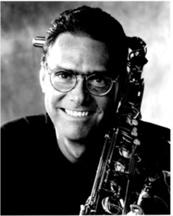
John Stowell's Jazz guitar mastery book is here!

Master guitarist and teacher John Stowell has just released his instructional book/DVD (Mel Bay publishing). Stowell's unique and highly advanced harmonic concept is fully explained by this book and DVD. The DVD allows you to watch and hear exactly what he's doing and the book has transcriptions in guitar tab and music notation. John is all about modes of the melodic minor scale, he uses them over just about everything. Over dominant seventh chords he teaches students that there are several melodic minor options depending on how many tensions you want to use.

For example over a C7 chord you can play:
  • G melodic minor- one tension (#11)
  • F melodic minor- one tension (b13)
  • Bb melodic minor- two tensions (b9, #9)
  • Eb melodic minor- three tensions (#9, #11, b13)
  • C# melodic minor- four tensions (b9, #9, #11, b13)
He arpegiates these scales to obtain his signature open, modern and often vertical sound. John also explains in his book/DVD how to use the melodic minor scale (a third down) over Major chords. This gives us the Augmented Major scale, which has a #11 and a #5. John also uses the Melodic Minor scale a whole step up to obtain a Major scale with a b9. These are obviously very spicy scale choices over a Major 7th chord but John really makes them work in a way that isn't jarring to the ears.

You can order John's book/DVD from Mel Bay.

I'm definately going to sit down with this and learn how John plays those sweeping modern lines of his. There is no one that sounds like John does, YET. Look out John, we're all going to cop your shit now! :-)

Look out soon for the Portland Jazz Jams TV episode on John that I directed and Darren produced. John demonstrates his improvisation techniques. It will be streaming on the PJJ site shortly.

12/26/05

Dan's Polyrhythmic Practice a la Warne Marsh


This is courtesy of PDX pianist Dan Gaynor. Over the last few years I've been playing with Dan quite a lot. If he really does leave for an East Coast grad school it will be a major blow for the PDX Jazz scene. Thanks Dan!

"I'm reading An Unsung Cat: The Life and Music of Warne Marsh, by Safford Chamberlain (thanks mom! merry christmas!), and it's really informative. There are a lot of interviews and perspectives on Warne Marsh, his music and also on the 'Tristano school' of improvisation. Tristano's thing was very conservative in many ways. For example, he believed that "the major innovators in jazz up to 1945" were Louis Armstrong, Earl Hines, Roy Eldrige, Lester Young, Charlie Christian, Charlie Parker and Bud Powell, with footnotes for Billie Holiday, Billy Kyle (as precursor to Bud Powell) and Art Tatum, but not Ellington, Jelly Roll Morton or Coleman Hawkins. So, he had a very conservative outlook, to say the least.

One of the more interesting things that developed within his method was a means of practicing rhythmic phrasing. Now, this method itself does not appear to be outlined in the book, and I don't personally know any of Tristano's students, but there are a few clues. It mentions "five beat phrases", meaning five eighth notes, and also mentions the last phrase of Tristano's "April," where an 11/8 figure (3-2-3-3) repeats three times. Now, I don't have access to Lennie's method, but I have made a list of uneven groupings of eighth notes that can be practiced over a 4/4 form (or just with a metronome). Accent the first of each group. They repeat in uneven ways compared with the other meter (4/4).


  • 3 notes, repeating.
  • 5 notes, grouped as 2-3 or 3-2
  • 6 notes, 3-3 or 2-2-2 (also 3-3-2-2-2 for a 12 note grouping)
  • 7 notes, 2-2-3, 2-3-2, 3-2-2
  • 9 notes, 3-2-2-2, 2-3-2-2, 2-2-3-2, 2-2-2-3
  • 10 notes, 3-2-2-3, 2-3-3-2
  • 11 notes 3-3-3-2, 3-3-2-3, 3-2-3-3, 2-3-3-3

These can be practiced in as many ways as you can conceive. Here are some ideas for pianists:

1. Major/minor scales, both hands, 4 octaves, 16th notes. Play the accents within the scale (either legato or detached with each group).

2. Improvise on a standard song (simpler changes are easier for this exercise), with a LH walking bass in quarter notes and RH playing an uninterrupted line. This has to be done slowly. The simpler the RH line, the better, for purposes of the exercise.

3. Improvise with the RH with an ostinato accompaniment in the LH, like a bossa nova bassline, or more pianistic things like a stride LH or a boogie-woogie line, even.

4. Make a stride/boogie/latin pattern which follows the polyrhythm and try to play the melody with the other hand. Or play chords with the RH and sing the melody.

These exercises are ways to practice how to juggle the polymeter and the meter of a rhythm section and not get lost. They're not limited to a eighth-note and 4/4 context by any means, though it is most useful there. One can imagine Bill Evans practicing this sort of thing with triplets in a jazz waltz. Anyway, I hope you like this stuff. Cheers!"


12/25/05

Rich Perry- eating standards for lunch

When I was in New York I played a few gigs a rehearsal big band that was run by a Russian composer/arranger/pianist. Like many bands of this type there was a rehearsal book and a gig book. The rehearsal book was all original and very challenging music written by the band leader and the gig book was all classic stock big band arrangements. The band leader got great NYC players to read through his original charts regularly by offering well paying black tie big band gigs once in a while. The second tenor player on this band was a sloppy forty-something guy named Rich Perry. Being fairly new on the NYC scene, I had no idea what kind of player Rich since he gave almost all of his solos away. When he did blow he sounded very abstract and loose. He really seemed not to give a shit about what he sounded (or looked) like, even though he sounded great. He just wasn't trying to impress anyone (like the rest of the was). I found out later that Rich was a mainstay in the Monday night Village Vanguard band (formerly the Thad Jones/Mel Lewis band). His playing really intrigued me at the time because he sounded so unique and advanced, but I never got to hear really stretch out. A friend turned me on to a few of his recordings recently; 'Live at Eastman' and 'What is This?'. I've been listening to them for days now. I haven't had my ears opened up so much by a player in quite a while. Rich swings like a madman and his sound is huge and dark, yet very controlled. One reviewer wrote that Rick was "lackadaisical and bohemian". He is loose and snaky, taking a while to build his solos to fever pitch. When he does get to full throttle he tears it up as hard as anyone alive. He is so incredibly natural sounding, by this I mean that he never sounds contrived or forced. Like his messy hair, his lines aren't sanitized for the amateur listener. Rich never plays down to the audience, never compromising his advanced harmonic and rhythmic concepts in favor of wide accesibility. In short he is the musicians musician. Even though he stays on the cutting edge Rich's sound is always musical and melodic. He just always approaches melodic phrases from an extremely oblique angle. I've really can't think of a badder cat that flies so low under the radar. Garzone is a pop star compared to Ritchie. I don't see this changing in the future since fame and fortune are obviously not motivating factors for Mr. Perry. For the moment at least, Rich Perry is my favorite tenor player alive. I just ordered his CD East of the Sun and West of 2nd Avenue and a trio recording called Beautiful Love. Check out these links to hear some short sound clips of Rich chewing up standards into tiny little pieces.

12/24/05

Reed update


I switched from Java reeds to WWBW Paris Jazz reeds a few months ago. I'm not quite as exited about the WWBW reeds as I was at first. They tend to be a bit edgy, still they are better cane and more consistant than Javas. The problem right now is that WWBW is running out of them. They're on back order right now so I'm waiting for my next fix, I mean shippment. In the meantime I got recieved some Riggotti Gold alto reeds and some Gonzalez. The Riggotti cane is similar French cane to Marca and Francois Louis. The Gonzalez reeds are made from Argentinian cane. I've been playing more tenor lately and trying different pieces so my reed consumption is out of control (for my my budget that is). If I was making over $10k playing with a hippie jam band (like some people I know) then I wouldn't have any more reed problems. I would just buy cases of reeds at a time and go through them until I found the perfect reed for every gig. Right I'm spending way too much bread on wood chips that would be more useful as toothpicks. A few days ago I went to the local music store and hand selected (at FULL retail box price) a bunch of reeds of different brands and strengths. Hey, guess what? Every SINGLE REED SUCKED ASS! Big surprise. Not one was even close. I felt like I just bought a big sack of oregeno at Washington Square park. I'll update this reed quest as soon as I get into these new boxes. I've also got some Rico Jazz selects and Marcas on the way so keeping checking back.

12/22/05

New Jason Dumars recording


My good friend Jason Dumars has just released a new solo recording on his web site. It's VERY cool. He plays all the instruments and was also the recording engineer. He got a great sound- I wish I could find an engineer that would record my sound that well. This material is pleasantly loose and energetic with indeterminate ethnic overtones. There is a lot of engaging full on action that keeps things interesting and highly unpredictable. It's hard to believe that he did this entire thing one track at a time. Bravo Jason! Link to the sound files.

12/15/05

NW Jazz profile interview with Robert Moore


Robert Moore is a trumpet player, vocalist, composer, and bandleader who recently relocated to Portland from Birmingham, Alabama. Every time I see him play I am impressed by his uncanny ability to connect with the audience and put them in the palm of his hand. His vocal style is somewhere between
King Pleasure, Mark Murphy and Ray Charles and his trumpet playing is lyrical and reflective like Chet Baker's. He always seems to know just when to break out his blues harp in order to make the room go nuts. Here is what he had to say about performing when I interviewed him at my studio recently:

DCV: How is the music scene here in the NW compared to the South?

Room: I miss some of the things about the South, there’s rawness in the
players there. They’re less concerned with playing correctly and more
concerned with the feel and energy of the music.

DCV: Do the audiences in the south have a different orientation towards hearing live music?

RoMo: I don’t think the audiences are different here. The players are more concerned with technique here than in the South. Southern players are more focused on the emotion and energy that they’re putting out. I feel more comfortable just letting things flow when I’m playing in the South. Here I sometimes find that I’m more self-critical when I play. A real player can connect with their source and express their emotions, AND be technically correct. This doesn’t happen often enough for me (laughs). My orientation as a front man is geared much more towards the house than a lot of other musicians. There seems to be a huge tendency in this business for self-indulgence. A lot of players go deep into self-explorations that they themselves may find fascinating- It doesn’t matter to them that their music is totally inaccessible to the audience. God bless so many audiences for enduring these endless solos that they can’t really understand or even appreciate.

DCV: Some people would say that you’re talking about ‘playing down’ to the audience. Others might also call this ‘showboating’ or ‘crowd pleasing’.

RoMo: I think you can play with taste, integrity, and unique interpretation and still be accessible and generally appreciable. That’s still valid. I lean toward simplicity but I don’t see that as ‘playing down’. It’s just speaking in an understandable, interpretable form. Things become more potent when they’re reduced. It’s like being given a blank canvas and being told
that you can only use two colors. The requirements artistically for that are challenging but are often rewarding.

DCV: Do you think someone like Bird operated with this same type of orientation?

RM: I think he probably did. Just look at the number of twelve bar blues he recorded. He started with recognizable phrases and developed them into complex melodies. You don’t need directionless chord changes to be interesting. (smiles)

DCV: How about late Trane then?

RoMo: Trane was seeking and reaching, but that’s a perfect example of a music that alienated a lot of people from Jazz. Don’t get me wrong, I love late Trane, but to most people it’s just honking and squeaking that they can’t understand. One of the reasons I was attracted to vocals was that it allows accessibility for the audience. You’re telling a story or acting out a part, this gives a grounding point for the listener. Combine that with a melody that’s compelling and…........(raises eyebrows with sly look)
___________________________________________________________________________

You can catch Robert perform on January 13th at the Blue Monk from 9pm-midnight. (3341 se Belmont, Portland, Oregon 97214, ph: 503.595.0575)

I’m directing a new Jazz TV series called Portland Jazz Jams TV. PJJ-TV features performances and interviews with some of the Northwest’s premier musicians and Jazz personalities. For PDX area show times or to watch the programs in high-speed streaming format go to: www.portlandjazzjams.com


Now get out there and support live Jazz!

12/3/05

Jazz Standards.com


I just came across a great site called Jazz Standards.com

This site is a must read for any working Jazz musician. For every Jazz standard they give useful information such as; anecdotes and origins, CD Recommendations, musician comments, Jazz history notes, research guide, soundtracks, harmonic analysis, origin, ranking, which Real books the tune can be found, music & lyrics, and other tunes written by same composer.

12/1/05

PJJ-TV show and new esoteric music Podshow


I've been working on a few projects with my good friend Darren Littlejohn, founder of Portland Jazz Jams. We've done a few different podshows and I'm co-producing and directing his new PJJ-TV cable show. The show is now available to stream or download and features Jazz performances, interviews and instruction by some of the North West's top artists.Here is one of the first episodes. I directed this one, we'll be doing more soon. If you have Tivo you can now access these shows be searching podcasts!

PJJ has also just released a podshow that I did with local saxophonist/composer/bandleader/engraver/web pioneer/scholar Jason DuMars.
We talk about the esoterics of music and play some free saxophone duos. I'm in the right channel.

My Jason DuMars blog post
Jason's bio page
Jason's vintage saxophone buyers guide
Jason's articles on his saxophone.org site

11/28/05

Tree of Life

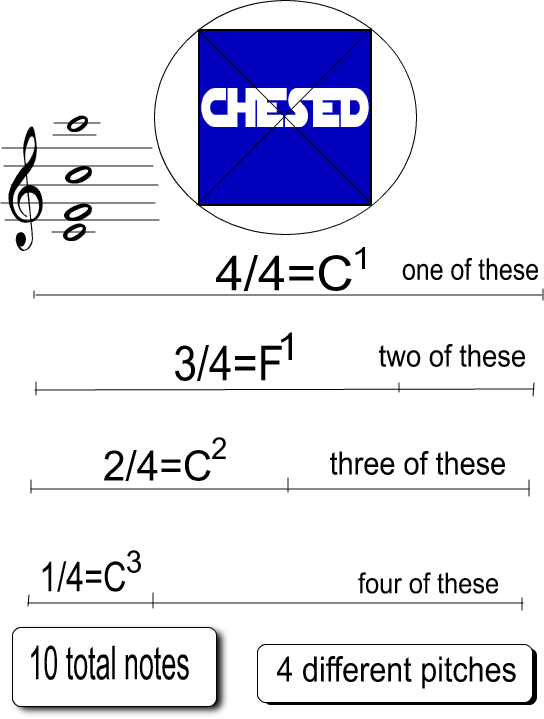
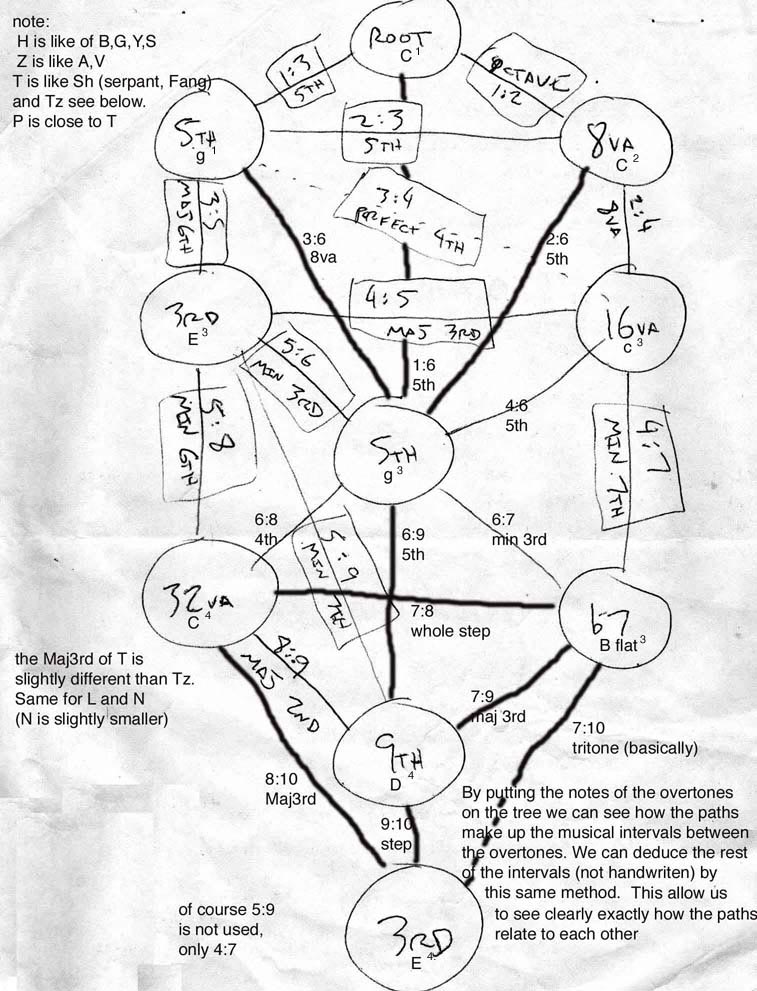
The Tree of Life is an ancient Hebrew diagram that maps the cosmos as well as the human psyche. Most esoteric scholars who study this system are unaware that it is also a map of the overtone series and of musical intervals. Every Hebrew letter represents a whole number ratio which is also a musical interval. This is a logical and rational system for classifying the fundamentals of musical acoustics as well as a mystical map of the subtle planes of the universe. In most ancient alphabets each letter represents a number.
In fact there aren't separate numbers and letters, only letter-numbers. This means that each word is a sum total of letter-numbers. This offers a way of understanding what each word means and what elements make it up. In English words do not have exact relationships with other words. With Hebrew (or Greek for that matter) each word has a very specific relationship with every other word.
Some words have the same total numeric value and are considered to be different aspects of the same energy. This study is called Gematria. Each word has it's place in a mathematical continuum. This type of esoteric study associated musical theory with astrology, geometry, cosmology and qualitative mathematics. Music bound the other esoteric sciences together into a coherent whole. Music has long since been disassociated from these other sciences to the detriment of them all. Musicians today aren't taught that musical harmony is also a system for mapping the innermost reaches of the human mind and for organizing abstract thought processes. The laws of harmony and acoustics are also the laws of vibrational interaction on every plane of experience. I've hardly begun on this subject and could fill many more pages were I to allow myself. Most musicians will not have the patience to delve deeply into this dry and esoteric subject and most esoteric scholars will not have the musical understanding to grasp the tonal significance of it as well.
Click on the graphics for a larger view of the diagrams.

Interactive Tree of Life

QBL as a spiritual path
Tree of Life article
QBL links
Letter as hand gestures
Role of the hand in evolution of language
Sonic theology


11/19/05

The controlled freak out- outside/inside playing

Improvising over changes takes many years of dedicated practice to master. It is a highly intellectually demanding act that requires knowledge of music theory as well as an excellent memory and quick thinking. Once players get a basic grasp of Jazz improvisation it is often hard for them to let go and play by ear again, as they did when they first started to improvise. Long before they were thinking about symmetrical scales or tri-tone subs they just followed their ears and let their fingers do the walking. Once they are blowing bebop lines through changes with some proficiency they find it hard to trust only their ears to navigate for them. I often try to get my students to move outside by disengaging their rational minds for just a moment at a time. It's almost harder to get an intellectual player to play by ear than it is to teach an ear player to learn Jazz harmony.


I like hearing bebop players who are able to step outside without using set harmonic formulas. There are many post-bop players who use harmonic devices in order to take it outside, fewer who are able to play freely by ear and then drop right back inside. It can be hard to convince a student who has worked hard to play over changes to ignore them, even if it is just for short periods of time. I may cross out a few chord changes and tell them to just blow whatever they hear over those bars. I tell them not to play anything that is directly harmonically related to the changes that the rhythm section is playing. They should land on the next written chord change with a strong chord tone. I try to get them to feel comfortable with playing totally outside by ear for just a bar at a time. This is like popping the clutch in a stick shift vehicle. The rational mind is forced to disengage from its calculations and computations while the ears and the fingers momentarily take the reigns. When the 'clutch' is re-engaged the rational mind takes over again without losing it's place in the tune. After the student is comfortable with one bar of cosmic freak out I'll have them try for a few more bars at a time.

It's also nice to work your way outside and then work your way back inside using chord substitutions. For example let's take the first five bars of the bridge of 'What is this thing called love?'

The written changes are:
C-7 /F7 /Bbmaj7 / /Ab7 (b9) /

Let's try playing the first chord of the bridge and then work our way out using strong resolutions, then right before the Ab7(b9) we'll play a few changes to get us back inside. So.....

C-7 B7 /E7 A7/FREAK /OUT! E-7Eb7/Ab7 (b9) /

By beat three we are starting to head outside, culminating in a six beat cosmic freak out in the third bar and the first half of the fourth bar. Beats three and four steps us back inside where we land on terra firma in bar five. Unscathed!

This example shows how we can gradually move outside using standard diatonic harmony, play free for a few moments and then step back inside without anyone knowing what hit them. This way the psychedelic freak out is woven into the tonal harmony seamlessly. It doesn't come as so much of a shock (which isn't always bad) to the listener and the transition outside and back will be much smoother. You'll be able to play like Archie Shepp even at a Bar Mitzvah or your hotel lobby gig!

Listen to George Garzone or Ellery Eskelin for their ability to step across the line between inside and outside playing with ease. Free playing doesn't always have to drive the grandmothers out of the room (my grandmother used to ask me when she came to my gigs if I was going to play any of that 'drive the grandmothers out of the room music'). Grandma won't even know that anything's wrong before you're back from your full fledged FREAK OUT.

11/8/05

Reply to a researcher on New Orleans music


Hi all, I got your email addresses from the Portland Jazz Jams website. I'm a senior at Portland State University and I'm doing a project about the musical history of New Orleans and the damage caused by Hurricane Katrina. I'm hoping you have time to answer some questions. Anything you have to say would be helpful. If you could briefly tell me if/how the hurricane has affected you, your music or anyone you know? Also, what do you think has been the greatest musical loss caused by the hurricane? Any other thoughts? I'm going to be compiling these interviews within the next week. Thanks in advance for anything you have to say; it is very much appreciated, Erica Reininger.

My reply:

Erica,
I'm not from N.O. You may want to talk to Devin Phillips. He can refer you to the other refugees in town from New Orleans.

I know a few folks down there. They have had to relocate, mostly to Texas. I think the greatest loss is all the long term musical projects that were ended because of relocation. I am affected in a positive way, in that I get to play with these refugees here in PDX. The hurricane has affected my music by introducing the New Orleans scene here in in PDX. It has made me more focused on the blues, on swinging, trying to tell more of a story, and playing to the audience more. These are elements that the New Orleans players have brought with them. I'm sure the dispersion has had this same effect on musicians everywhere the refugees have settled. This is bad for the city of New Orleans, butprobably good for the musicians of the host cities.

I always viewed New Orleans as a musical backwater, kind of stunted. Great players lived there and came from there, but I didn't think much of the Jazz world felt like New Orleans was still a great scene. The biggest thing there was Dixieland and that was for the tourists sake. There was also a strange blend of old bebop, brass band music and blues. The thing that really put it on the modern musical map was the Marsalis family and they were never very forward thinking (except for Branford). So I didn't really have much respect for New Orleans. To me it was a dirty, racist, straw hat and suspender wearing, drug addled, poor, hot, humid, boozer's Disneyland. I thought all the really great shit was happening in NYC and that Wynton was a throwback that had hurt the industry.

After being exposed to these players I have come to appreciate the New Orleans style much more. I can see just how NYC has strayed from real swing in favor of freaked out chord changes and odd-time signatures. In NYC psuedo-hipsters stroke their goatees in high-brow martini bars while listening to slide trumpet players playing avant-garde Jazz over world-beat techo-jungle grooves. In New Orleans they always try to connect with the audience with hard swinging and bluesy Jazz. They usually aren't hipper-than-thou, like so many NYC bands. One of the New Orleans musicians told me," I just want to play some jazz, drinks some drinks, and talk to some ladies. All night, all the time." That sums it up right there! In New Orleans they're not so worried about getting written up in the Village Voice, or scanning the audience for Blue Note A&R reps. They aren't trying to take the Jazz world by storm. They just want to play good music and have some fun. There is always the possibility of getting called by Wynton. Devin told me that you don't go audition for Wynton or try to get on his band. Wynton will hear about you if you're happening and then he'll call for you. No one counts on that there.

In the end, I think the elements from an earlier era of Jazz that New Orleans has preserved will re-invigorate the greater Jazz scene. We don't necessarily need a resurgence of Dixieland :-) , but we always could use more swing, more wailing blues and more gravy.

I guess Katrina has profoundly affected my musical outlook. I'm starting to let go more of my need to always play the most harmonically advanced lines that I can possibly come up with. I'm also trying to make my lines swing more and I don't feel as self conscious about playing simple (and sometimes cliché) bluesy phrases.

More modern isn't always better. Usually more modern means less swinging. Less swinging is never good. I hope enough New Orleans musicians relocated to NYC to effect players there the same way that I have been affected.

10/25/05

Gary Campbell's Triad Pairs for Jazz

I just picked up Gary Campbell's book called Triad Pairs. Mr. Campbell is and Associate Professor at Florida International University in Miami since 1993. His book thoroughly details how to use pairs of triads in Jazz improvisation.

In his introduction Mr. Campbell explains the importance of triad pairs in improvisation:


"Why Practice Triad Pairs?

1. By limiting note selection to six tones (each triad consisting of three), a more concise sonority is created. For example, the conventional chords used in the Jazz idiom are oftentimes associated with parent chord-scales of seven or more tones (melodic minor, major, minor, harmonic minor, and so on). Rendering these scales in the form of triad pairs yields more variety in tone color and suggests novel melodic possibilities.

2. Each of the triads expresses a tonality. By using two triads, bi-tonal effects are created. This effect is multiplied when the triad pair is used over a root tone that is not present in either triad.

3. The structure and "tensile strength" of triads give the melodic line an independent internal logic. The "stand alone" sound is oftentimes enough to make a strong, effective melodic statement regardless of how it is (or isn't) relating to the harmony over which it is being used. It sounds "right". {see my Thursday, August 18, 2005 post- Bob Reynolds on Garzone's Theory of Major Triads}


4. The triads offer a skeleton structure to base lines on. This can be very helpful in modal settings where there are no diatonic, cycle-forth root movements or resolutions and where each chord change may last a long time (for instance, four, eight, or sixteen measures)"

The applications of this concept are covered in great detail in this highly informative book.

Here is an example of the concept applied to a C melodic minor tonality:

A C melodic minor scale contains the following triads-

Cmin Dmin Eb+ Fmaj Gmaj Adim Bdim

The possible triad pairs are:

Cmin/Dmin__Dmin/Eb+__ Eb+/Fmaj__ Fmaj/Gmaj__ Gmaj/Adim__ Adim/Bdim Bdim/Cmaj

Of these the preferred selections are:

Cmin/Dmin_ Eb+/Fmaj_ Fmaj/Gmaj

These are the chords that a C melodic minor scale can effectively be applied to:

Cmi(maj7) Dsus(b9) Ebmaj7(#5) F7(#11) G7(b13) A-7b5 B7alt

  • One of the most basic triad pairs is Major triads a Whole step apart. This one triad pair is explored exhaustively in Walt Weiskopf's book Intervallic Improvisation (Abersold press). I f you have ever heard Walt play you will hear him use this A LOT! It can be used over ANY Major chord and any Dominant chord with a natural 9th and 13th. These two triad triads contain the following:
1st triad- root, 3rd, 5th

2nd triad- 9th, #11th, 13th

Other triad pairs covered are:
  • Major Triads a Half-Step apart
  • Major Triads a Tritone apart (works well over dominant seventh b9 chords from the root)
  • Minor triads a Half-Step apart
  • Minor Triads a Tritone apart

And on and on.........


Here are is a triad pair idea for a /ii-7 /V7 /Imaj:

Over a- / D-7 /G7alt / Cmaj /

Play- / G triad F triad / Eb triad Db triad / C triad D triad /

  • Here is the same concept applied to a diminished scale (also see my Monday,June 27th post-Slonimsky's Symmetrical Scales-Diminished, Wholetone):

Over a C7b9 chord you can play a- C# diminished 7th chord, a D# diminished 7th chord, AND A, F#, Eb, and C major triads.

All these ideas will open your playing up and break you out of the linear rut that Jazz players often fall into. If you start with some of these ideas and then start adding more outside triads to the mix you can come up with some very modern and interesting lines. Try adding some passing tones between the triads to smooth things out.

I would highly recommend Gary Cambell's Book Triad Pairs to any player looking for new improvisational material. This book will really open up your lines and give you some new ideas for playing over chord changes. It is also good for improving sight reading and technique.

Here is a link to order Triad Pairs for Jazz

9/13/05

Special Function Dominant Chords

Special function dominants are dominant seventh chords that do not resolve down a fifth or down a half step. These dominants have reasonably strong resolutions to tonic Imaj7 chords and can be used by the improviser or arranger as substitutes for V7 chords. Though these special function dominant chords do not have as strong resolutions as V7s or subV7s, they are strong enough to be used as subs for these chords. SFD chords can be used to create a more desired bass line or to harmonize hard to voice melody notes. They can also be used by the improviser to create interesting reharmonized lines over existing chord changes. One thing to keep in mind when you are creating reharmonized lines or chord changes is that you may always precede these SFDs with their related ii-7s.

Here are the Special Function Dominants:

  • I7 this is used in blues progressions as a tonic dominant. It also sometimes resolves to the Imaj7 tonic.
  • II7 this chord is closely related to the bVI7 and the #IV-7b5 (they all share the same tritones). It is normally analyzed as V7/V (secondary dominant function), except when it resolves directly to I when it acts as a SFD.
  • IV7~ used in blues progressions, resolves to a I7. IV7 is diatonic to melodic minor, and has a subdominant function in that context.

Blues context: /C7 /F7 /C7 F7 /C7
Minor context: /C-6 G7(b13)/ C-6 F7/ C-6 /

  • bVI7 ~ usually analyzed as a sub V7/V. When resolved directly to I it creates a special function cadence. This chord is derived from the chromatic harmony of the 19th century. This chord is closely related to the IV- chord, although it is not diatonic to the minor key. This chord is said to have an altered subdominant minor function.
  • VII7 ~this is usually analyzed as a V7/III, except when it resolves directly to I. Since VII7 is not associated with any particular area within the key, its function is simply cadential.
  • bVII7 ~this chord is derived from natural minor and has a subdominant minor function. This is an example of modal interchange. The IV-7 is often used with the bVII7 in a subdominant minor pattern like so: /C- /F-7 Bb7/C- //

How do we apply this knowledge?
As improvisers, we need to be able to create valid and functional chord progressions on the fly. Special function dominants can help us do this.

  • We can add SFDs after V7s, before resolving to I:
/D-7 G7/Ab7 Cmaj7/
This creates a delayed resolution, which is always interesting.
  • We can use them at the very end of a tune for a candenza, right before the last chord of the tune.
  • We can add the SFD's related ii-7 and substitute or add to an existing ii-7/V7/I:

/D-7 / G7 /Cmaj7 / (original)
/F-7 /Bb7 /Cmaj7 / (substitute)
/D-7 G7/F-7 Bb7/Cmaj7 /

  • We can also use them as passing chords to break up a bland Imaj7 section in a tune:

/G7 / Cmaj7 /Cmaj7 / Cmaj6 / (original)
/G7 / Cmaj7 Ab7 /Cmaj7 D7 /Cmaj6 / (with SFDs)
/G7 /Cmaj7 Eb-7 Ab7/Cmaj7 A-7 D7 /Cmaj6 / (with added related ii-7s)

The best way to get used to the sound of the SFD chords is to sit down at a piano or with a guitar and play through all of them. Try playing them one at a time and resolving to Imaj7 after each one.

For example:
Cmaj7 /C7 /Cmaj7 /D7 /Cmaj7 /F7 /C7 /Ab7 /Cmaj7 /Bb7 /Cmaj7 /B7 /Cmaj7 //

9/8/05

Francisco Mela w/ George Garzone


Francisco Mela is a young cuban drummer who is currently living in Boston. Here is a link to his web site, there are some good MP3s of him playing with George Garzone and John Lockwood.

9/7/05

David Valdez w/ Pere Soto & Dan Schulte

Here is the first audio file of my playing on this blog. This is a podcast from my gig last week with Spanish guitarist Pere Soto and bassist Dan Schulte. My personal favorite is the very last tune called Oasis.


All the tunes are written Pere Soto or Lee Konitz.


MP3 file of Red and Black gig